
Exercise for fibromyalgia pain: start in the water, build strength over time
A review of 51 trials found water-based exercise eased fibromyalgia pain most in the first three months, with resistance training best after that.
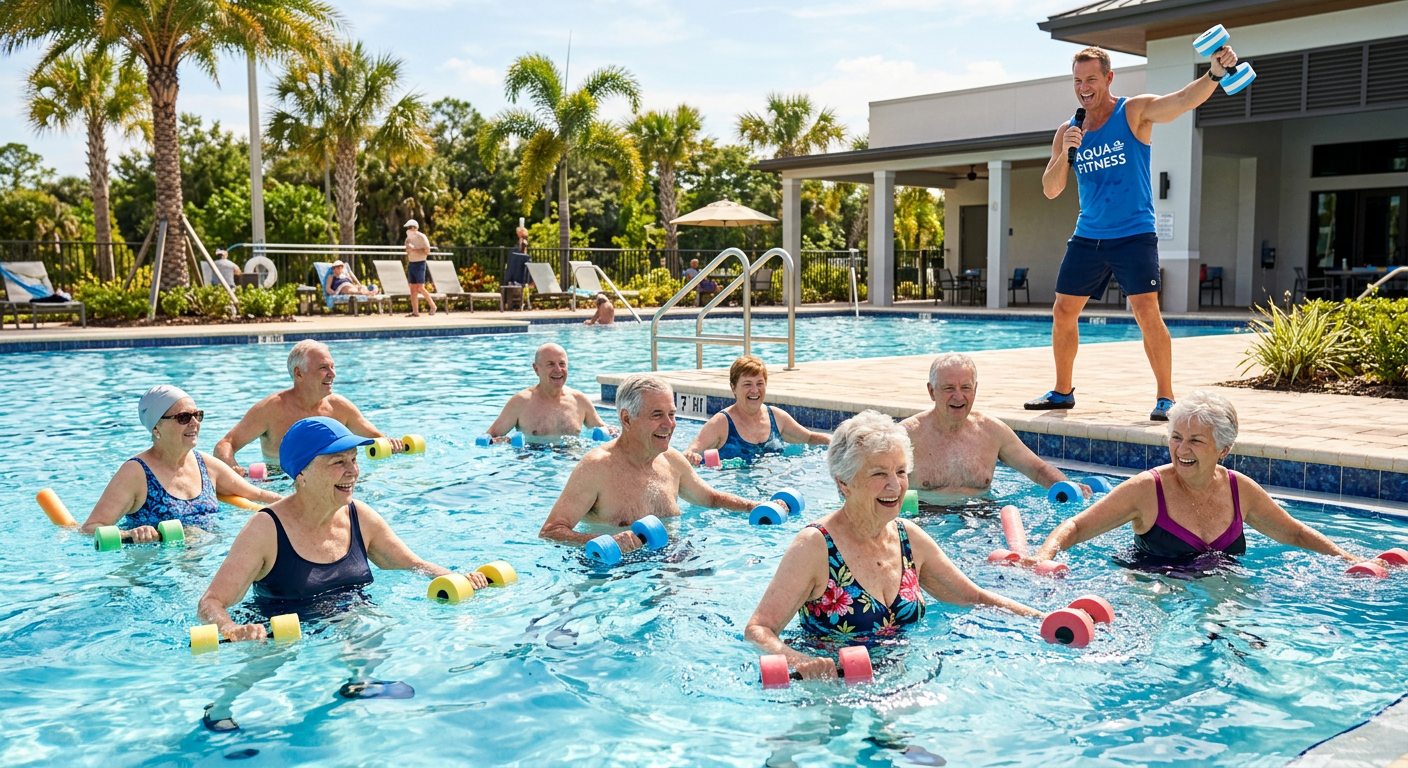
A review of 51 clinical trials found water-based exercise eased fibromyalgia pain most in the first three months, and resistance training did best after that.
What the research found
Fibromyalgia causes ongoing pain in many parts of the body, often with fatigue and poor sleep. About 2 in every 100 people have it, and it is more common in women (healthdirect).
Exercise is already one of the main recommended treatments. The open question has been which type works best.
A 2025 review in the Brazilian Journal of Physical Therapy pooled 51 randomised trials involving 2,873 women with fibromyalgia. It compared 15 types of exercise for pain relief:
- Up to three months: aquatic exercise, such as swimming or water aerobics, reduced pain the most.
- After three months: resistance training, using weights, bands or body weight, reduced pain the most, with improvements of more than 30%.
- Also helpful: Pilates, qigong, aerobic exercise, dance and mixed programs.
The authors rated the overall evidence as moderate and called for more trials.
What that looks like in practice
The two findings work as a sequence, not a choice. Water supports your body weight and takes impact out of the movement, so it is a manageable place to begin. healthdirect also lists walking or water-based exercise as a good starting point.
Strength work pays off more slowly. Arthritis Australia notes that muscle weakness is very common in fibromyalgia, and that pain, fatigue and inactivity feed each other. Its advice is to begin with light loads under qualified supervision and add resistance only as you feel able.
Arthritis Australia's exercise guidance gives some practical rules:
- Start with much less than you think you can manage, then build gradually.
- Several short sessions of five to ten minutes can be easier than one long one.
- Use the two-hour pain rule. Extra or unusual pain lasting more than two hours after exercise means you did too much, so do less next time.
- Some pain most of the time is common with fibromyalgia. On its own, that is not a reason to avoid exercise.
The type you will keep doing matters more than the ranking. Pick something you enjoy and can get to easily.
What the study can't tell you
The review is useful, but it has limits worth knowing:
- Women only. Every trial studied women, so the results may not apply to men.
- Not specific to over-55s. The trials covered women with fibromyalgia generally, not older adults as a group.
- Pain only. It measured pain intensity, not fatigue, sleep or day-to-day function.
- Older diagnoses. Some trials may have used diagnostic methods that have since been updated.
- No dose. It did not establish how often, how hard or how long to exercise. The authors say future studies should.
Getting started in Australia
- See your GP first. This matters most if you have not been diagnosed, have other health conditions, or have not exercised for a while.
- Ask about a GP Chronic Condition Management Plan. With a plan and a GP referral, Medicare subsidises up to 5 individual allied health services per calendar year. These can include an exercise physiologist or physiotherapist (Services Australia). Check fees with the provider when you book.
- Get the program set up by a professional. Arthritis Australia recommends starting under a physiotherapist or exercise physiologist. Search for one at essa.org.au or physiotherapy.asn.au.
- Then find a class or routine you can keep up. A water-based class, a supervised strength session, or both.
For more information, call the Arthritis Australia Infoline on 1800 011 041 or read its booklet Taking control of your fibromyalgia. Fibromyalgia Australia also publishes patient information.
This article is general information, not medical advice. Talk to your GP or allied health professional about what suits you.
Train with Glen
GlenCook.FIT is a mobile fitness service for older adults on the Sunshine Coast, so sessions come to you. If you have the go-ahead from your GP or allied health professional and want help building a routine you can keep up, get in touch at glencook.fit.
Sources
- Rodríguez-Domínguez ÁJ, Rebollo-Salas M, Chillón-Martínez R, et al. The most effective therapeutic exercises for pain intensity in women with fibromyalgia: a systematic review and network meta-analysis. Brazilian Journal of Physical Therapy. 2025;29(4):101226.
- Pine L. Which Exercise Works Best for Fibromyalgia Pain? New Study Ranks the Options. The Educated Patient, 12 May 2025.
- healthdirect. Fibromyalgia. Last reviewed August 2024.
- Arthritis Australia. Exercise and fibromyalgia information sheet. Reviewed May 2024.
- Services Australia. Chronic condition individual allied health professional items. Updated 21 August 2025.