Court-Ready: Strength and Balance for Pickleball After 55
Pickleball is easy to learn, but its quick stops, lunges and swings are hard on joints and shoulders. This simple at-home routine for legs, shoulders, core and balance helps players over 55 stay safe and confident on court.
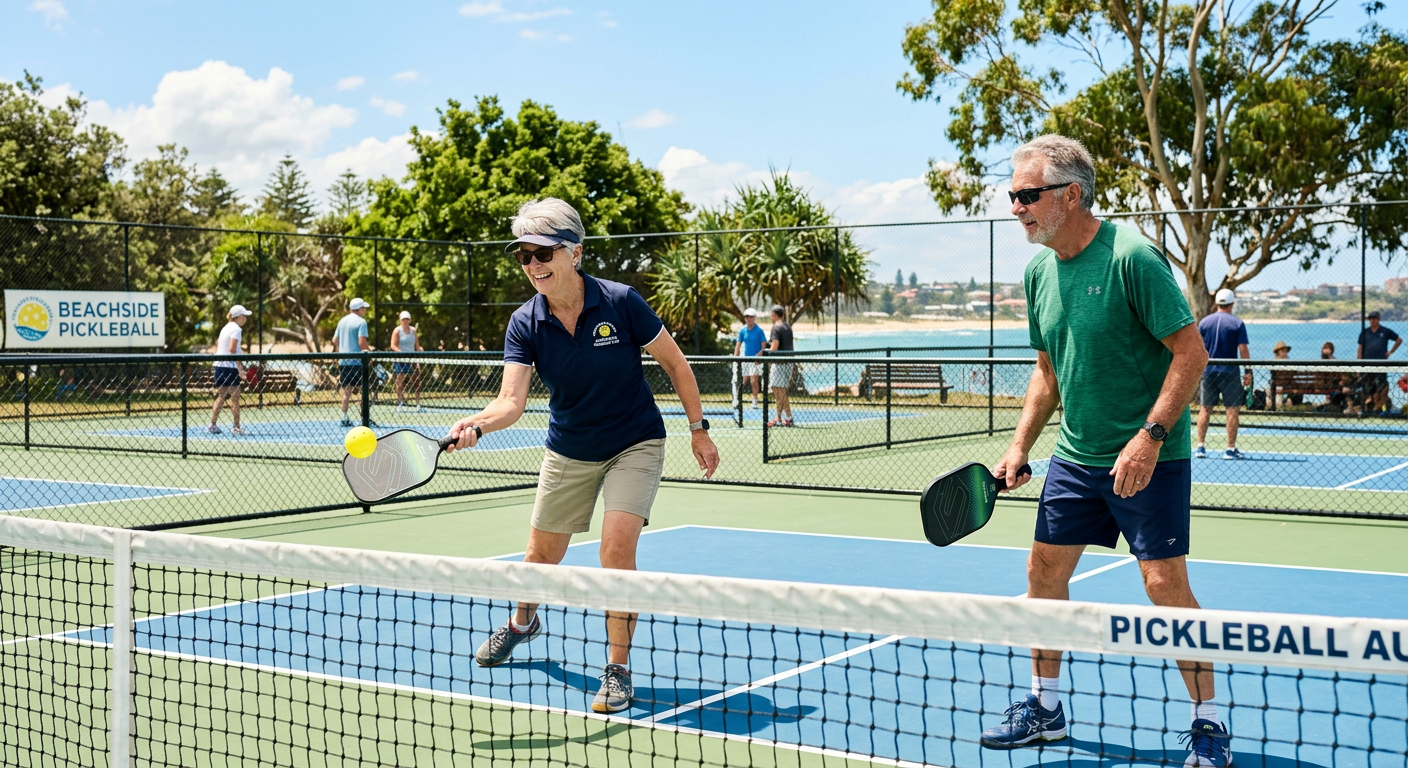
Pickleball has taken off with older adults, and it's easy to see why. The rules are simple, the court is small, and a game of doubles is as much a catch-up with friends as it is a workout. I've had plenty of class members tell me it's become the highlight of their week.
It's still a sport, though. Short sprints to the kitchen line, sudden stops, lunging for a low dink and twisting to reach a wide ball all place real demands on your ankles, knees, hips and shoulders. As more people take up the game, injury clinics are seeing more strains, overuse shoulder problems and falls on court.
The good news: a small amount of off-court training makes a big difference. This post outlines a simple routine you can do at home two or three times a week to play more safely and more confidently.
Do I need to be fit to start?
No. Pickleball suits almost every fitness level, and your fitness will improve as you play. A few tips if you're new:
- Start with doubles. You cover half the court, which keeps the pace manageable.
- Play social sessions first. Look for beginner or social drop-in times at your local club, where rallies are relaxed.
- Build up gradually. One or two sessions a week is plenty to start. Add more once your body has adjusted.
If you have a heart, joint or balance condition, or you haven't exercised for a while, check in with your GP or physio before you start.
The at-home routine
Work through the exercises below as a circuit. Beginners can start with 1–2 rounds of 8–10 reps; build to 3 rounds of 10–15 reps as you get stronger. Keep a sturdy chair, bench or kitchen bench within reach for support.
Legs: power and joint stability
- Sit-to-stand (or squat). From a chair, stand up without using your hands, then lower slowly back down. Keep knees tracking over your toes. Progress to a squat without the chair when you're ready.
- Step-back lunge. Holding support, step one foot back and lower gently, keeping your front knee over your ankle. Stepping back is usually easier on the knees than stepping forward. Alternate legs.
- Calf raise. Rise onto your toes, pause, and lower slowly. Strong calves and ankles help with quick starts and stops.
Shoulders: control and injury prevention
Repeated swinging is the main cause of pickleball shoulder complaints. These exercises target the muscles that stabilise the joint.
- Wall push-up. Hands on the wall at shoulder height, body in a straight line. Lower your chest towards the wall and push back. Step your feet further back to make it harder.
- Band row. Anchor a light resistance band at chest height. Pull your elbows back and gently squeeze your shoulder blades together, keeping your shoulders away from your ears.
- Band external rotation. Elbow bent to 90°, upper arm against your side (a rolled towel helps). Rotate your forearm outwards against light resistance, then return slowly. Use a light band; this should never be painful.
Core: steady through the twist
- Glute bridge. Lying on your back, knees bent, lift your hips until your body forms a line from knees to shoulders. Lower slowly.
- Bird dog. On hands and knees, reach one arm forward and the opposite leg back, keeping your hips level. Start with just an arm or just a leg if needed.
- Plank. On forearms and knees (or toes), hold a straight line for 15–30 seconds, breathing normally.
Balance and agility
Balance lowers your risk of a fall on court. Agility is balance on the move: starting, stopping and changing direction smoothly.
- Single-leg stand. Hold a support and lift one foot. Aim for 30 seconds each side, working up to a minute. Once you're steady, try it with a lighter grip, then hands free.
- Side shuffle. In a slight squat, take 8–10 quick side steps one way, then back. Repeat 2–3 times. This mirrors the lateral movement at the kitchen line.
Around every game
- Warm up (5–10 minutes). Marching, arm circles, gentle squats, side steps and a few practice swings.
- Cool down. A few minutes of easy walking, then gentle stretches for calves, thighs, hips, chest and shoulders.
- Wear court shoes. Running and walking shoes are built for forward movement. Court shoes support side-to-side movement and protect your ankles.
- Drink water before, during and after play. On the Sunshine Coast, morning or late-afternoon sessions are easier in the warmer months, and don't forget sunscreen and a hat on outdoor courts.
The bigger picture
Pickleball works best as part of a balanced week. Australia's physical activity guidelines for adults 65 and over recommend at least 30 minutes of moderate activity on most, preferably all, days, including activities that build fitness, strength, balance and flexibility. Your games count towards that total; walking, cycling, aqua and strength classes fill in the rest.
Schedule rest days too, especially when you're new. Gentle walking or stretching on those days aids recovery. And if something hurts, stop. Pain that lingers for more than a couple of days is worth a visit to your physio.
Want a hand?
The strength, balance and mobility work in my classes is designed with exactly these movements in mind. If you'd like help putting together a routine for your game, get in touch.
Inspired by Training for Pickleball: Strength, Balance, and Injury Prevention from the Silver&Fit team.